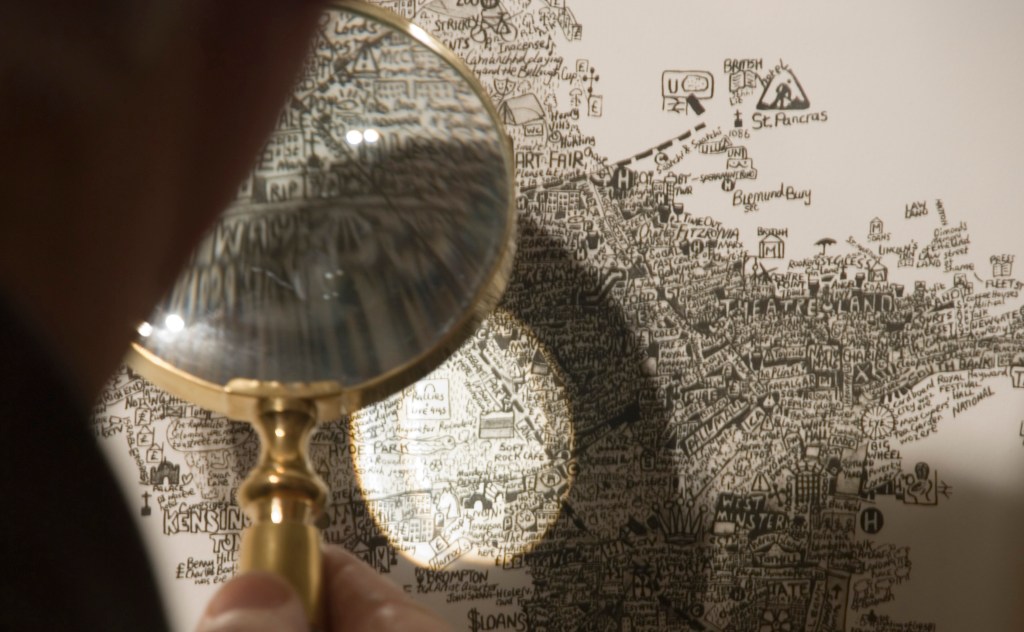
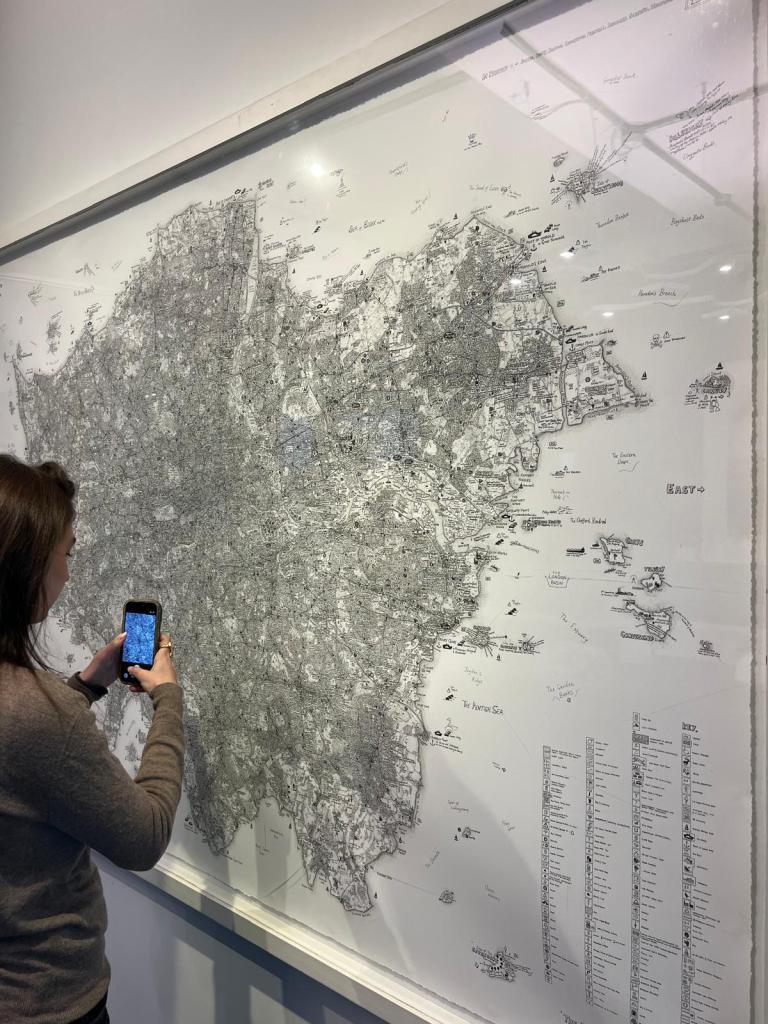
2008 marked a pivotal moment for both TAG Fine Arts and the artist Stephen Walter, as it was the year he launched his first major project, The Island: London Series‘ with an exhibition at The Crypt, St Pancras. This exhibition focused on intricate drawings mapping the city’s 33 individual boroughs, merging them into one large island. As Walter puts it, he wanted to “show London as one of Britain’s islands”, a cartographic choice that allowed him to map more than just the streets; he also mapped the city’s personality. Walter’s re-imagination of London as an island is the result of an enduring fascination with the city’s ability to constantly reinvent itself, building on top of what was, and continually shifting its cultural identity.
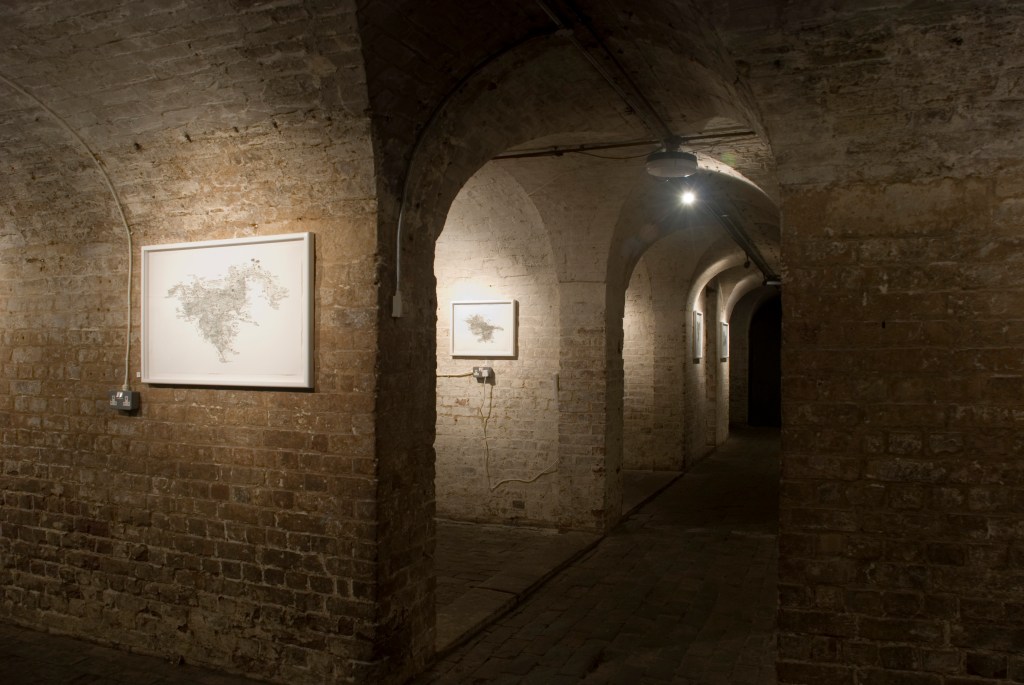
Images from Stephen Walter’s exhibition at The Crypt, St Pancras
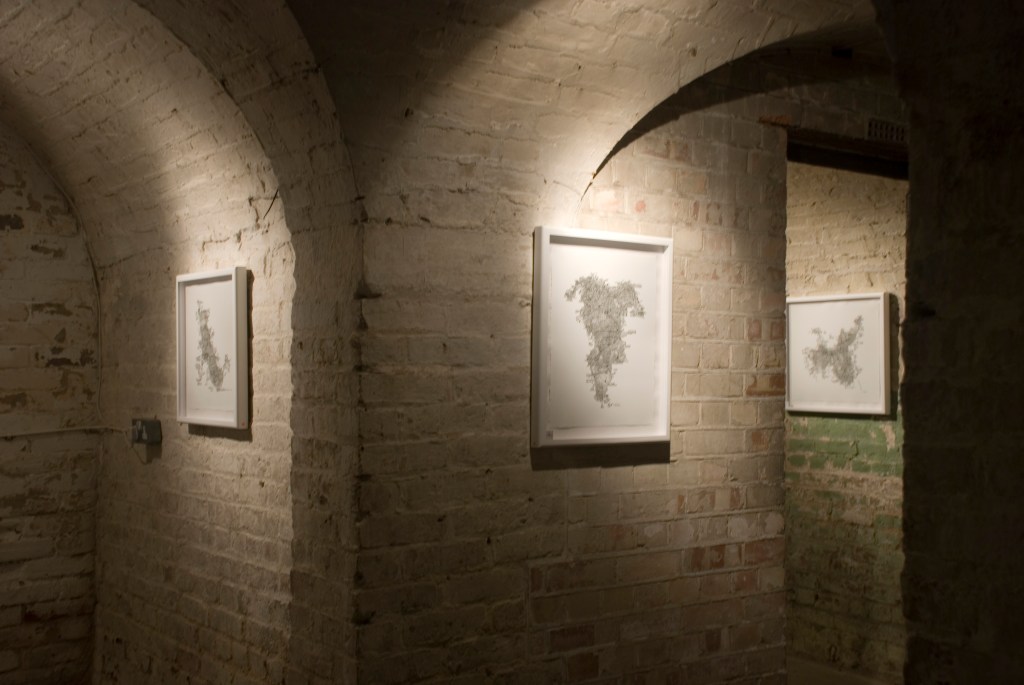
Stephen Walter’s works are known for their remarkably dense and detailed narratives, capturing the artist’s fascination with the interweaving complexities of our contemporary world. In his investigation into the topography of our environments, he captures the significance of place, and the physical, cultural and epistemic remnants that makes London as a city so special.
This piece conveys the history of London in numerous ways, mixing mass details, information and humour. Having lived in London for most of his life, Walter blurs personal memories and experiences with facts about the city and its geography. The map is packed with symbols, iconic locations, personal stories and local myths.
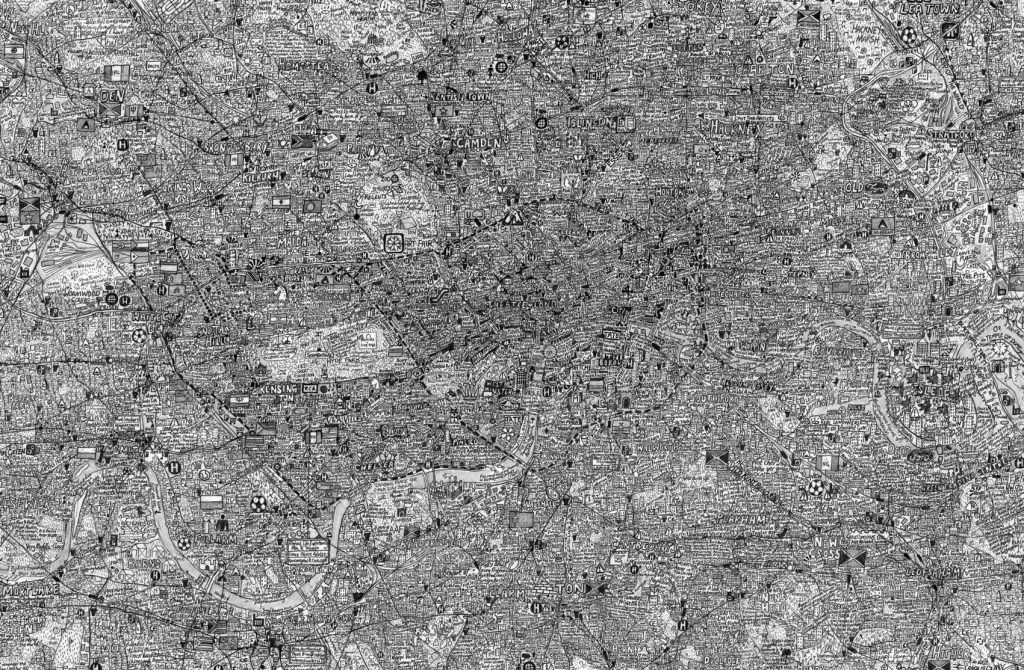
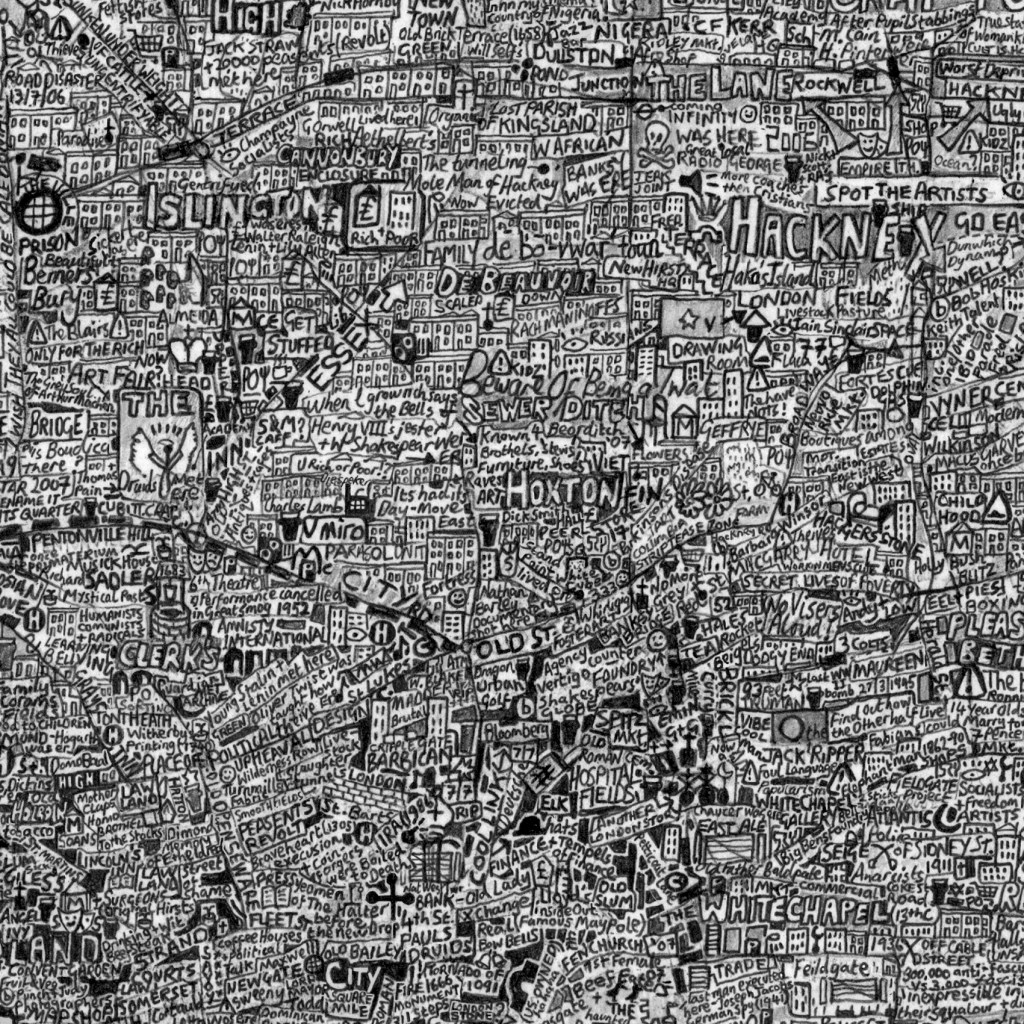
The more you look, the more Walter’s meticulous yet exuberant cartographic style reveals itself. In the top-right corner a “courtesy” section lists sources that range from notable artists to Wikipedia, illustrating that information provided on the map is not necessarily coming from official cartographic sources, and underlining the map’s playful and self-aware tone. It also allows the viewer to get the full picture of how knowledge is compiled throughout one’s life: part formal record, part hearsay, part lived experience.
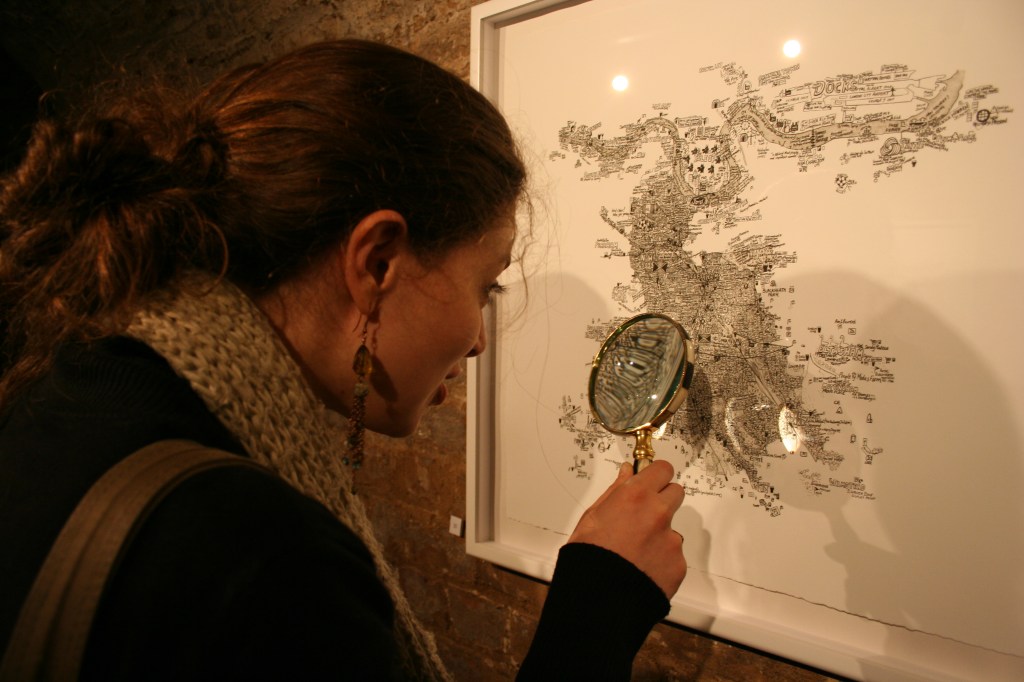
Moreover, the piece’s large scale (app. 1 x 1.5 metres) makes the use of a magnifying glass a necessity to explore the countless mini-narratives tucked into the composition. During the 2008 exhibition with TAG, visitors were provided with magnifying glasses, making their viewing experience more dynamic and almost like a forensic exercise. As a result, visitors spent hours in The Crypt uncovering the map’s secrets, turning a quick glance into a slow, rewarding exploration. Walter’s The Island can be seen as an invitation to get curious, to notice the small things, and to remember that a city’s character lives in its details.
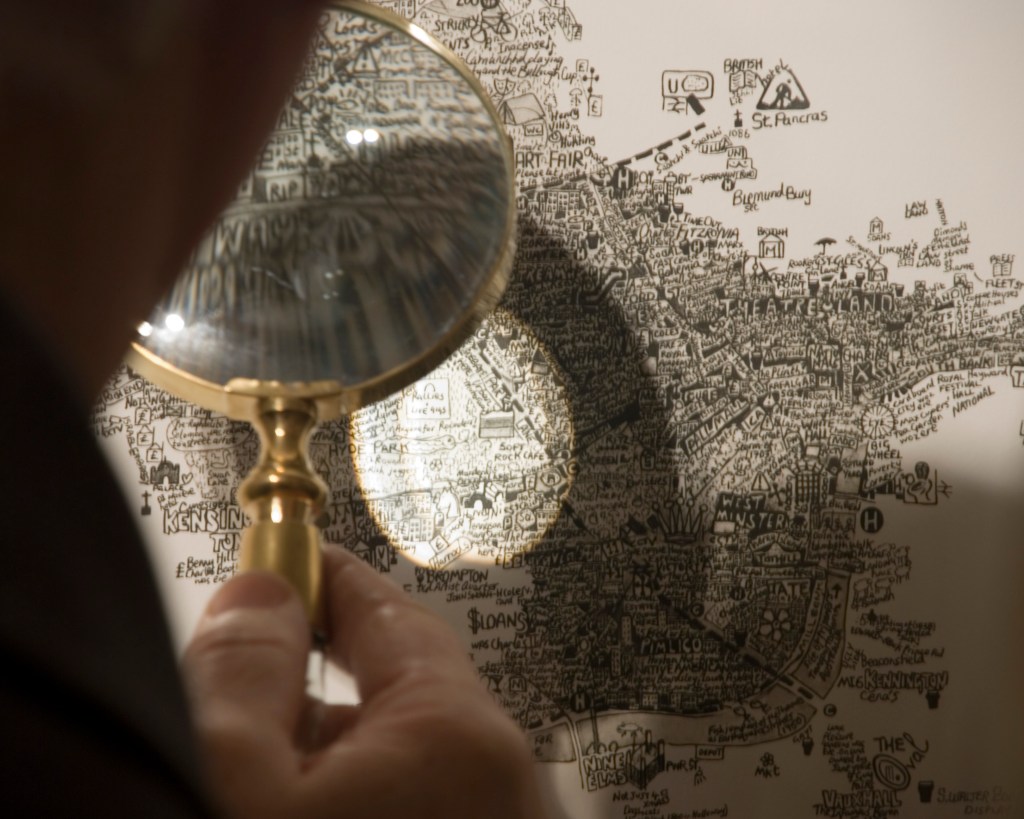
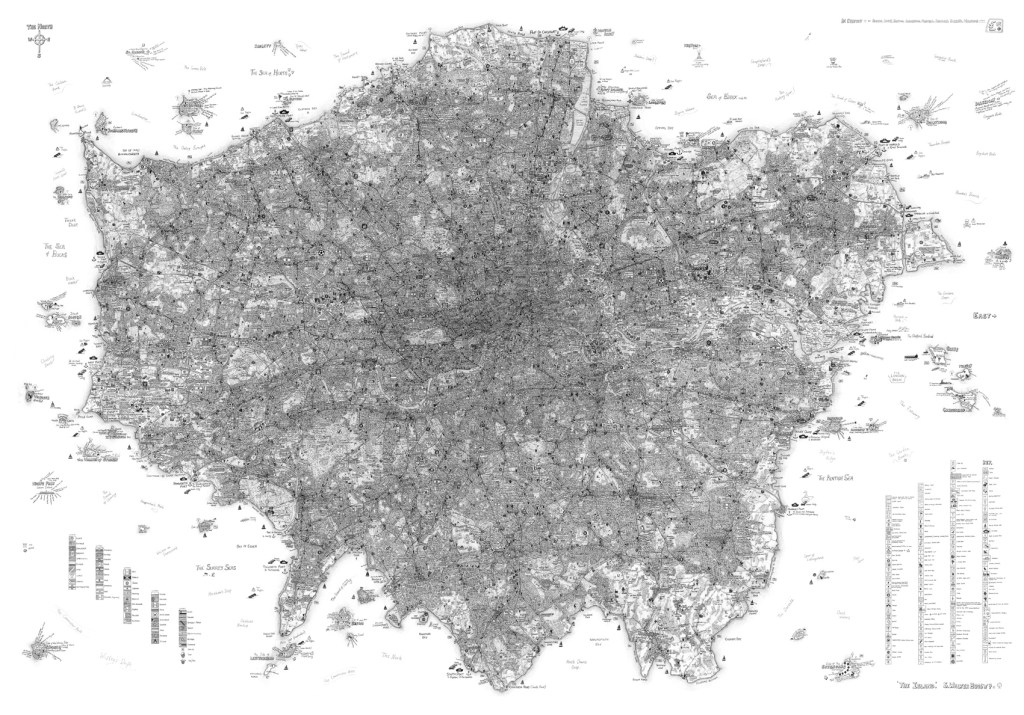
Stephen Walter, The Island, 2008, Archival inkjet and screenprint on hand torn fine art paper, 140 x 200 cm
 Contemporary Cartography