Let’s take it back to where it all began …
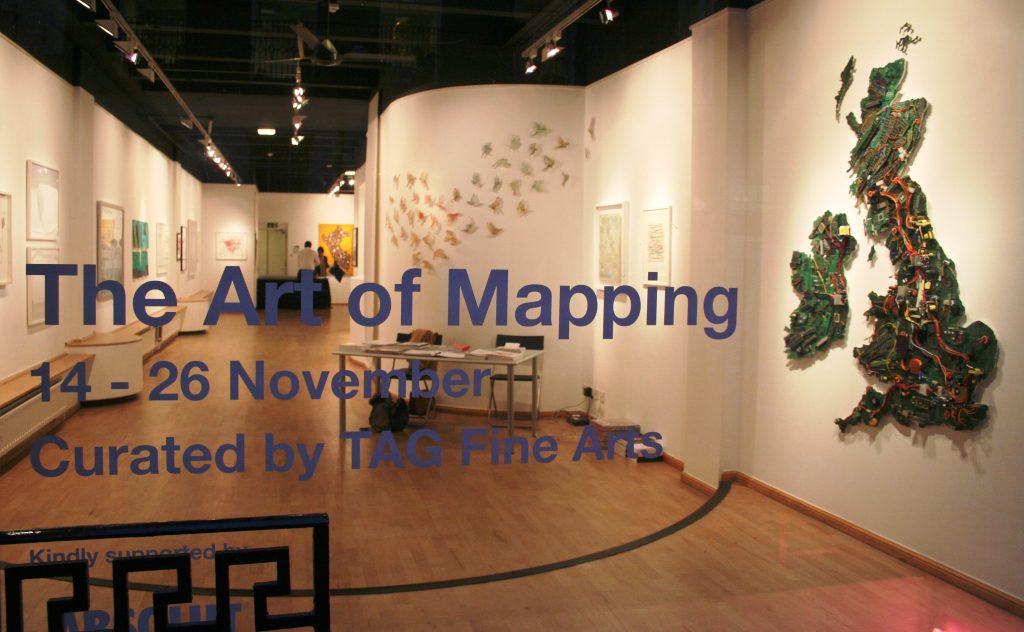
Going back to 2011, TAG Fine Arts held a widely celebrated exhibition named ‘The Art of Mapping’, a group exhibition of contemporary artistic cartography. Through this exhibition, TAG celebrated the potential of cartography’s as an art form rather than simply a science or resource. Traditionally, artists have used maps as a response to their ever-changing environments, allowing them to register their emotions, ideas and visions. By engaging with this visually rich tradition, TAG brought a new perspective and shed light on the ideas we attach to cartography itself, other than its mere usefulness in our daily lives.
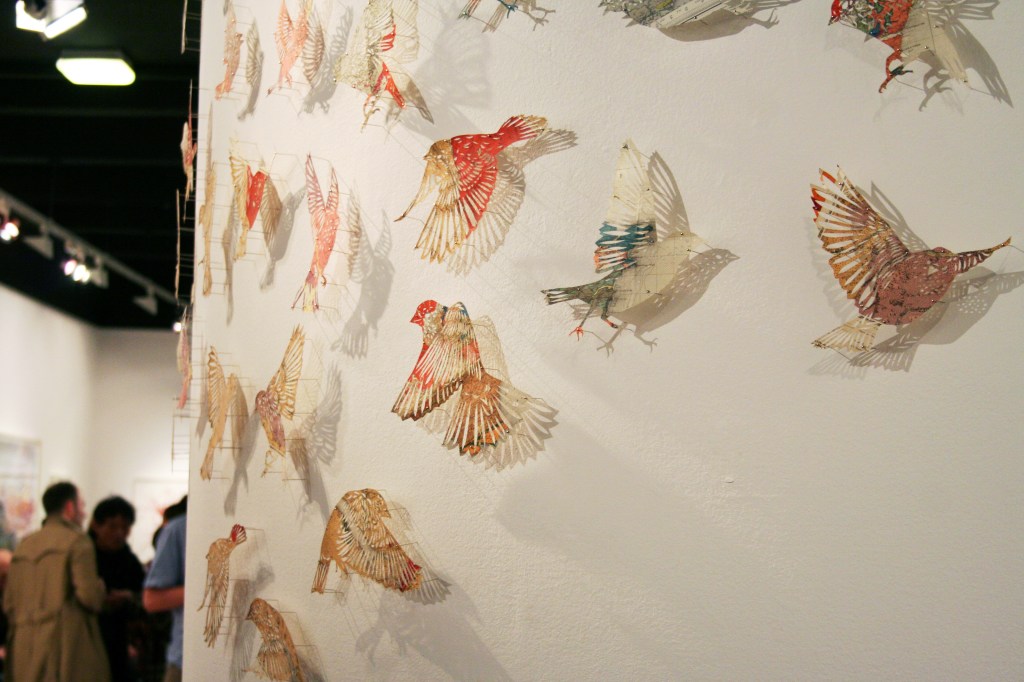
The idea for the exhibition sparked from a gift received by Hobby Limon, Director and co-Founder of TAG Fine Arts, of “The Map As Art: Contemporary Artists Explore Cartography”, a book by Katharine Harmon which focuses on map-related artistic visions by well-known artists, such as Ed Ruscha, Julian Schnabel, Olafur Eliasson, William Kentridge, and Vik Muniz. For these artists, maps are not just geographic representations, but sources of inspiration that provoke innovative creations and challenge conventional viewpoints. This thematic exploration resonated throughout TAG’s exhibition, which garnered acclaim for its diverse range of works. Each piece highlighted the interconnectedness of cartography with disciplines such as computer science, anatomy, and linguistics, demonstrating how artists draw from various fields to enrich their narratives and challenge normative perceptions of space and place.
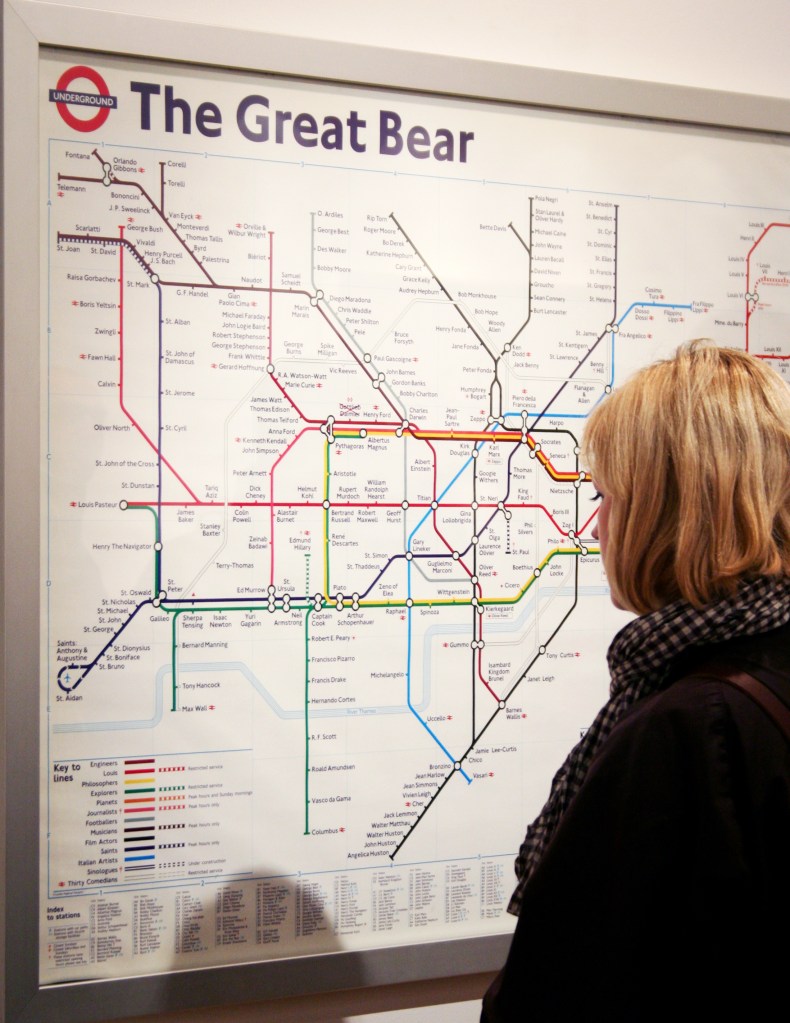
One particularly striking piece at the exhibition was Simon Patterson’s ‘The Great Bear’, which was on special loan from the London Transport Museum. By replacing the names of stations with those of philosophers, actors, politicians, and other celebrated figures, Patterson playfully challenges the belief that maps and diagrams are always reliable sources of information. This piece holds a special place in modern mapmaking to this day, as one of the most recognisable and influential reimaginings of the practice.
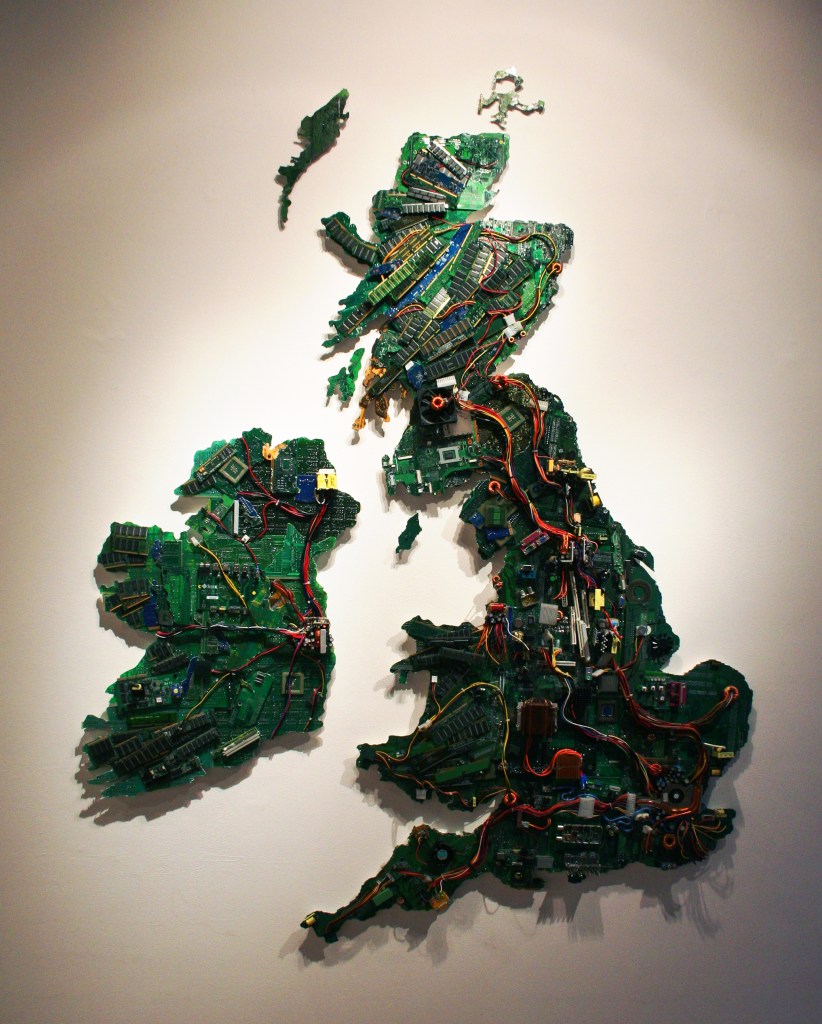
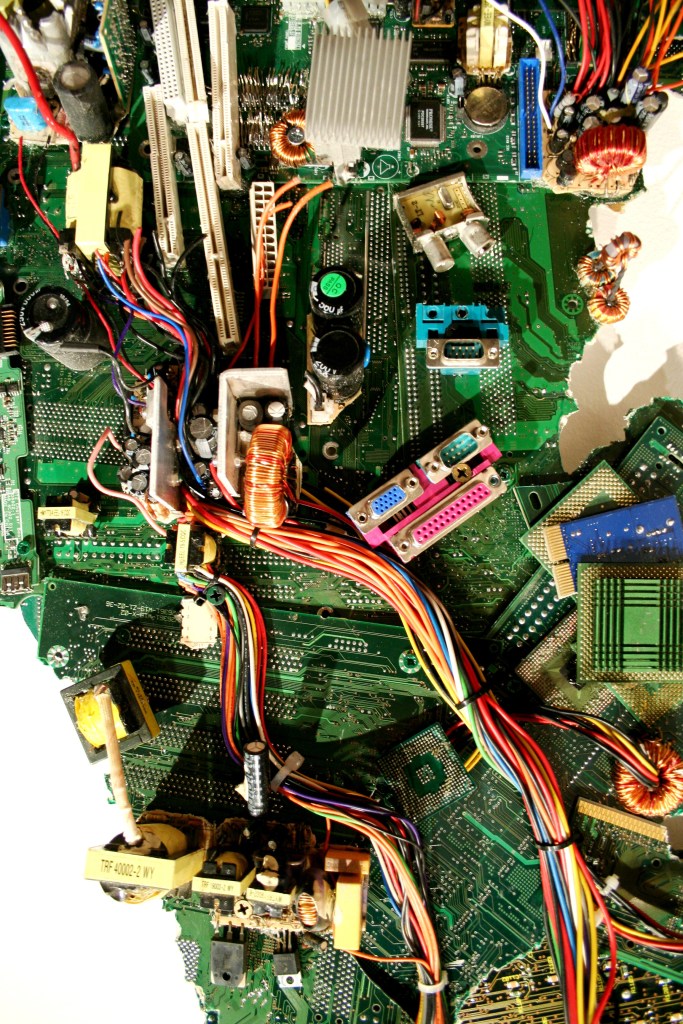
The significance of this exhibition also lies in the inclusion of a few specially commissioned pieces, such as Susan Stockwell’s “Jerusalem”, a map of the British Isles made from recycled computer components, taking its name from the famous hymn by Hubert Parry and Keith Blainville. Through this work, Stockwell not only showcases colourful beauty and a map-like physical setup, but also sparks questions about the social impact of computers and widespread technological developments. Through this, her innovative use of recycled everyday materials serves as a medium to address contemporary issues in ecology, geopolitics, and global commerce.
Justine Smith’s “Time is Money Map” was another exciting work in which she integrated banknotes into mapping, revealing the power of money to bind and divide communities while also illustrating their visual beauty. The way she structured the work around time zones and an international array of currencies also allows her to address the dichotomy between how our world functions and what it looks like.
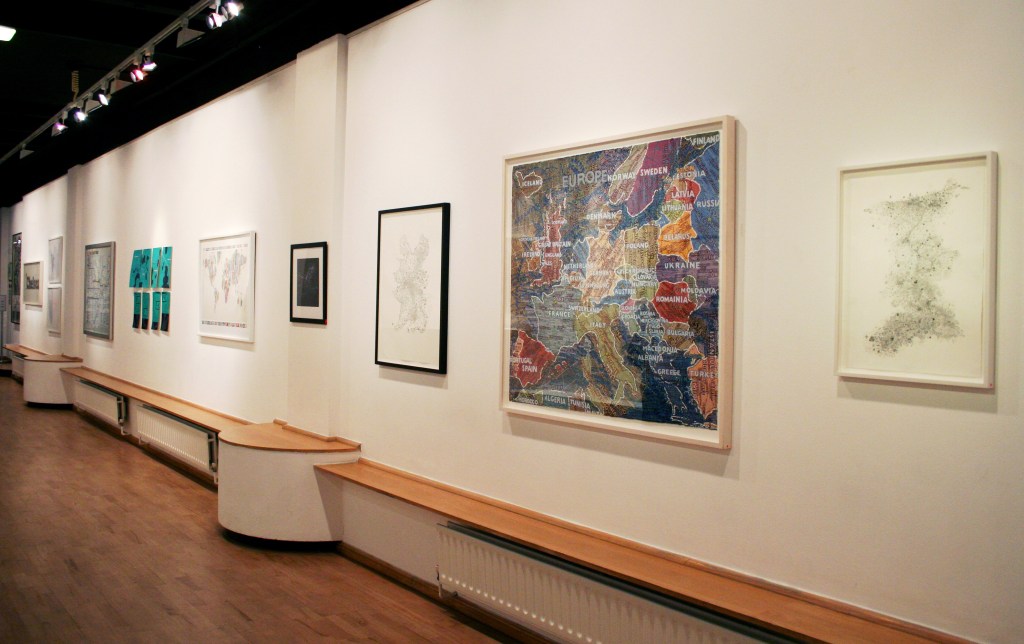
The exhibition also featured a work by Paula Scher, one of the world’s most influential graphic designers. The work “Europe” is a representation of the modern age, brilliantly mixing popular opinion and personal significance. The work captures attention from how dense and wordy its detail is. As such, Scher comments on how constant deluges of data confuse instead of confirming our understanding of the world.
To this day, mapping continues to influence artists, scholars, and enthusiasts alike. By challenging conventional perceptions and exploring the artistic dimensions of cartography, this exhibition opened new avenues for creative expression and critical thought. It encourages us to consider how the maps we create and the ones we use shape our understanding of the world around us. As we navigate an increasingly interconnected and complex global landscape, the insights gained from this exhibition remain more relevant than ever.
Artists in the exhibition:
Neal Beggs, Claire Brewster, Christa Dichgans, Stanley Donwood, Peter Dykhuis, Dahlia Elsayed, Rob Good, Gonkar Gyatso, Emma Johnson, Jonathan Parsons, Simon Patterson, Nigel Peake, Grayson Perry, Rob Ryan, Paula Scher, Justine Smith, Susan Stockwell, Robert Walden, Stephen Walter, Heidi Whitman, Jeremy Wood, and Cai Yuan

